Shimla, 29.04.2025:
IBEX NEWS,Shimla
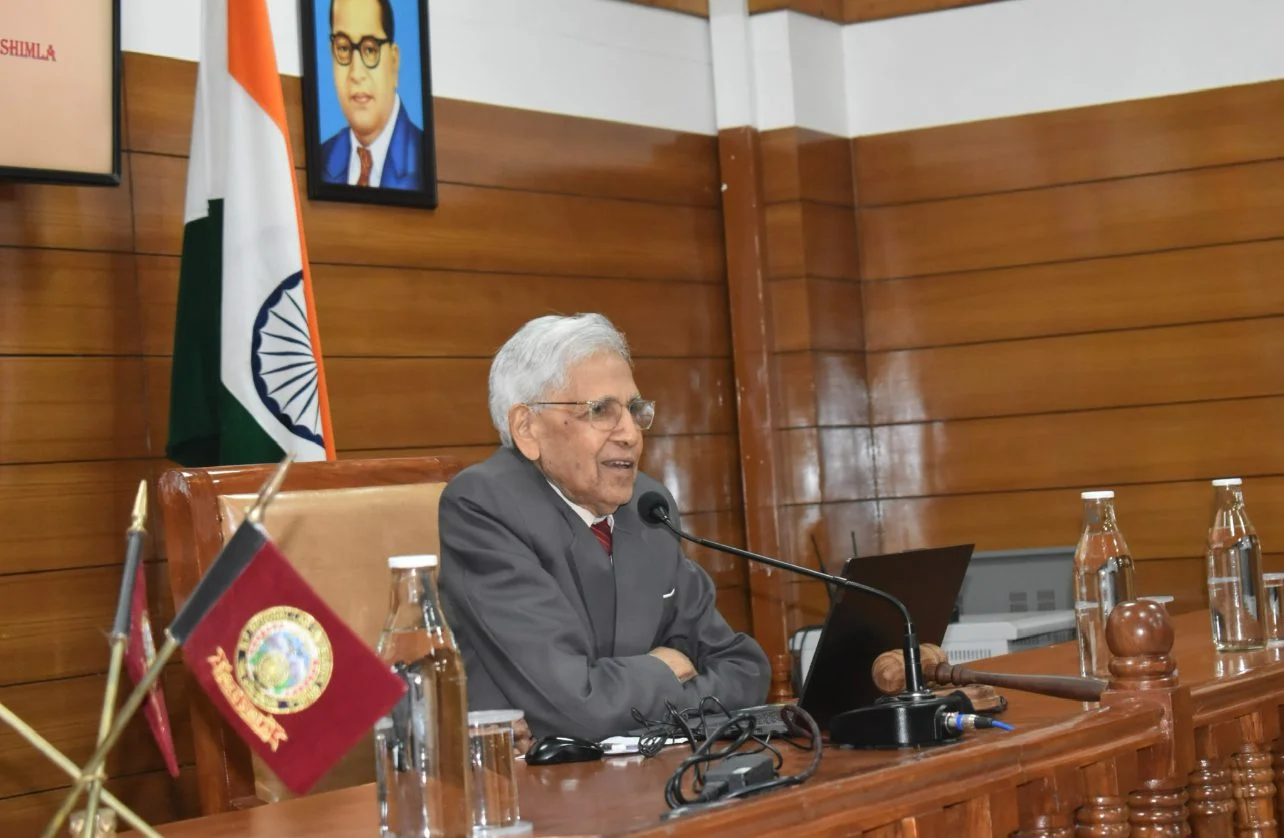
The Centre for Philosophy and Comparative Law Studies, Himachal Pradesh National Law University (HPNLU), Shimla, under the leadership of Prof. (Dr.) Priti Saxena, Vice Chancellor, HPNLU, organized the inaugural session of a Special Lecture Series on April 29, 2025. The session featured an erudite lecture by Prof. (Dr.) Virendra Kumar, Professor Emeritus in Law, Founding Director of Chandigarh Judicial Academy (Formerly: Chairman, Department of Laws; Dean, Faculty of Law; Fellow, Panjab University; and UGC Emeritus Fellow).
The first lecture of the series was titled “One Nation One Election: A Juridical Critique of the Constitution (129th Amendment) Bill, 2024.” The event was attended by undergraduate and postgraduate students, research scholars, and faculty members of the University.
The welcome address was delivered by Prof. (Dr.) Priti Saxena, Hon’ble Vice Chancellor, HPNLU, who expressed her appreciation for Prof. Kumar’s valuable contributions to the constitutional scholarship and raised the various questions, such as federalism and democracy, in context of the 129thConstitutional Amendment Bill.
Prof. (Dr.) Chanchal Kumar Singh, Director of the Centre for Philosophy and Comparative Law Studies and the organizer of the event, introduced the speaker and outlined the objectives of the lecture series, noting its importance in nurturing a critical understanding of contemporary constitutional developments. He lauded the efforts of Prof. Kumar in bringing the fresh perspective in the constitutional scholarship.
Prof. (Dr.) Virendra Kumar provided a critical constitutional analysis of the proposal for the simultaneous elections, drawing from the recent recommendations of the high-level committee constituted under the leadership of Hon’ble Former President of India, Shri Ram Nath Kovind. In his lecture, Prof. Kumar elaborated on a six-fold strategic framework envisioned for implementing simultaneous elections across the India:
- Initiation of a synchronized electoral process across the nation.
- Empowerment of the Election Commission of India to manage the complexities of the transition.
- Addressing legislative cycle disparities among state assemblies.
- Restraints on the House of the People to ensure continuity in synchronized elections.
- Restraints on State Assemblies to maintain harmony in the electoral schedule.
- Amendment of the Constitution to explicitly incorporate the concept of simultaneous elections.
While highlighting the prospective benefits—such as reduced electoral expenditure, governance stability, and the fostering of the constitutional value of fraternity—Prof. Kumar also offered a critical evaluation of the Bill. He observed that the proposal does not risk diluting the federal character of the Constitution, primarily through mechanisms like curtailment of state assembly tenures and the overuse of non-obstante clauses, which could result in incidental or transitory but not substantive change, therefore the Bill does not violate the federal structure of the Indian Constitution. While referring to the majority judgment of Janhit Abhiyan v. Union of India, he reflectively opined that the Bill is not violating the basic structure of the Indian Constitution, contrary to what Justice U.U. Lalit remarked before the JPC. Prof. Kumar put emphasis on the idea of fraternity which may be upheld if a voter expresses the political will keeping in mind the unity and integrity of the nation and the regional aspirations.
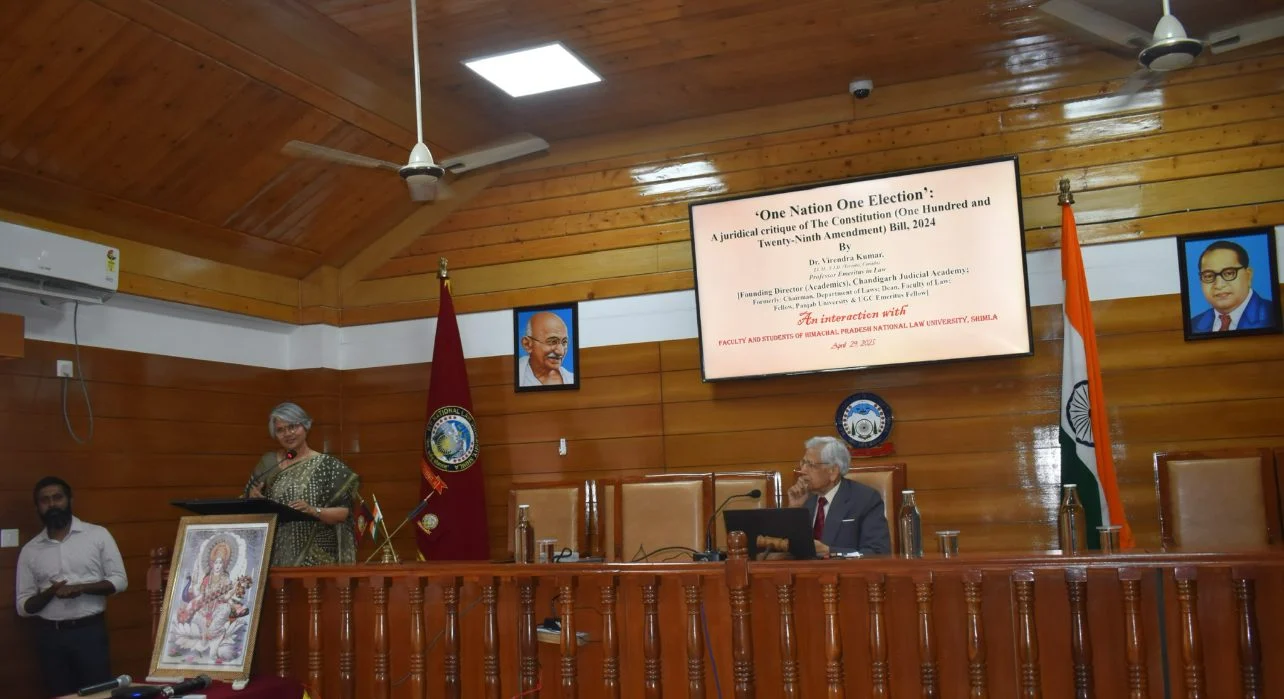
The lecture concluded with an engaging interaction session, with students and faculties, reflecting on the constitutional, political, and practical dimensions of the proposed reforms. Dr. Mritunjay Kumar, Co-Ordinator of the Centre for Philosophy and Comparative Law Studies, HPNLU Shimla proposed a Vote of Thanks for the lecture and appreciated the way Prof. Kumar advances with the contemplative constitutional scholarship while following the various judgments of the Supreme Court of India.
The next lecture in the series is scheduled for tomorrow and will focus on:
“Reservation within Reservation: A New Evolving Constitutional Strategy of Consolidating an Equitable Inclusive Society 'from Within’”—an analysis of the landmark 7-Judge Constitution Bench judgment delivered by the Hon’ble Supreme Court of India on August 1, 2024.
About the Author